
Here’s a bit of the first chapter.
Enjoy!
All art is erotic.
—Gustav Klimt
Chapter One
Donna Edith
A cylindrical aquarium stood in the center of the waiting room, stretching to the ceiling. Hidden lights glowed from the top and bottom of the tank, illuminating the pastel jellyfish inside. The receptionist wrote Vessa’s name and time of arrival on a clipboard and told her to have a seat. The chairs were upholstered in turquoise velvet and distinct marks were left in the nap of the fabric, cheeky prints of their previous occupants. Vessa remained standing.
A man with white hair and a ginger goatee sat in a corner, the only other person in the waiting area. He was an aged tiger of a man, grizzled and dangerous, and handsome. She would have painted him a room in orange and silver. His lips turned up at the corners, under his mustache, when he met her glance through the fish tank. She looked away, wondering what it would feel like to kiss a man with that much facial hair.
“Vessa,” the very blond receptionist called. “Donna Edith will see you now.”
The next room held more fish. A tank full of flickering darts with azure and bloodred stripes down their sides sat against a wall, and a glass bowl in a macramé hanger housed a black Siamese fighting fish. It raised its fins at Vessa and swished a fluffy tail. She fluttered her fingers, and it retreated behind a plant.
Someone cleared her throat. Vessa spun around as a woman stepped out from an alcove. She was beautiful in that timeless way of movie stars from an earlier era, ageless and effortlessly sexy, with a cool stare that left Vessa feeling naked and naive.
Vessa made herself smile and mean it. “Hello,” she said. “Your fish are pretty.”
“That is Lucifer.” The woman offered her hand, bare of rings. “I am Donna Edith,” she said, the emphasis on her second name, as if Donna were a title, like Missus, or Doctor. “And you are Vanessa, Simone’s daughter.”
“Yes.” Vessa shook her hand: smooth fingers, perfect manicure, a brief clasp and release. “She said you could help me.”
“I certainly hope to. How is your mother?”
“Good. She’s in Africa right now.”
“And Rudolpho? Is he with her?”
Vessa bit the inside of her cheek to keep her jittery laughter inside. She’d never heard anyone call her stepfather anything but Rollo. “They got a huge grant for the water project last month. They’ll be able to help thousands of people.”
“Simone didn’t seem pleased with your choice to move back to Vermont.”
“She worries.” The walls in the spacious office were dusty mauve, with a deeper shade below a white chair rail. Neutral and noncommittal, yet strangely intimate, like the conversation.
“She says your decision is based on rebellion rather than a need for roots and family.”
“My mother understands a fight against authority. But she’s never wanted to belong anywhere.”
“And you do. Fair enough. Why now?”
“My grandfather had a stroke this spring,” Vessa said. “Not a big one, but enough to make me realize how important family is.”
“Are you two close?”
Vessa looked out the window, toward the lake, where her dad’s father had taught her to swim and to fish. He’d let her help paint his boat, when she was six, the first time she’d ever held a paintbrush.
“As much as we’ve been allowed to be,” she said. A few weeks every July, and phone calls on holidays and birthdays—except this last one, when he’d been in the hospital.
“No time like the present, then,” said Donna Edith. “Have you found a place to live?”
“Yes. A loft. Above an antique shop. Brass and Bones. The owner is my landlord.”
“Manuel Luna. He’s a lovely man.”
“You know him?”
“I do.” Donna Edith raised an eyebrow and Vessa squirmed, embarrassed. Of course Donna Edith knew her landlord. She knew everyone. She even knew who Vessa was, when very few did.
“Did your mother explain what my agency does?” the woman asked.
“She said you place people.”
“Precisely. I only accept referrals because it is too easy to misconstrue what we do. We are not an escort service, nor are we a temporary employment brokerage—though both structures are similar. Clients come to me with a need, and I match them to other clients with needs. Some are longstanding or repeated requests. For example, Mrs. Zimmer prefers to bring her own partner to her ballroom dance lessons, and several young men have benefited from the social guidance of an older woman. Rudolpho needed a spokesperson for his crusade. Your mother needed a cause for all her restless energy.”
She gestured to the alcove, where a kettle hissed from the hot plate. “Would you like a cup of tea?”
“Yes, thank you,” Vessa said, and Donna Edith smiled, like Vessa had passed a test.
Donna Edith stepped to the tiny kitchenette. The pins in her hair were tipped with black pearls. They glimmered, like the iridescent fish in the bowl.
“Come choose.” She beckoned to the tiny room.
The shelves above the burner and the mini-fridge were filled with boxes and tins, some with handwritten labels, some with gorgeous packaging of high-end specialty stores.
Vessa mouthed the name on one that had fancy vowels. “What would you recommend?” she asked.
The woman set two glass mugs on the counter. “For you?” She made a show of looking Vessa up and down, then pulled a tin from a shelf and gestured to the couch by the window. “Have a seat.”
Vessa sat while Donna Edith poured the water over the tea strainer, a hinged, holed spoon. She brought a tray to the table at the sofa, dropped a cube of sugar in one mug and stirred the spoon three times. When the liquid turned amber, she handed over the mug.
Vessa took it carefully, terrified she would spill it but grateful to have something to do with her hands. Donna Edith’s tea turned dark gray and smelled of burnt wood. Vessa sniffed her own. The steam was scented like whiskey and roses.
“Tell me about yourself, Vanessa.” Donna Edith leaned back in the cushions, sliding one foot out of her shoe and tucking it beneath her.
“It’s Vessa. Or Vess. Nobody calls me Vanessa except my father’s wife. She doesn’t care for me much.” The second hand on the desk clock clicked, out of sync with her heartbeat. She wove her fingers through the handle of her mug, staring through the liquid to the star in the bottom made by the cut crystal base.
“My bachelor’s degree took five years at three different schools. Then it turned out being a scenic artist requires an MFA to get hired anywhere that actually pays. But grad schools want a year in the field and a professional portfolio before they’ll even look at your application. And in L.A., no matter how good you are, to get work—even an internship—you have to mingle, to network and be social and talk about yourself.”
Vessa blew across the mug and took a tiny sip. The tea tasted like it smelled: smoky and floral with a touch of sweetness. “That’s lovely.”
The betta fish preened in its bowl, like it had been the one to make the tea. The woman at the other end of the couch watched Vessa over her own mug.
“So, basically, college was half a decade of me learning to paint walls that get torn down after three weeks, and the credentials to wait tables with a name tag that says ‘Tess.’”
Donna Edith cocked her head to the side, pinning her with eyes as sharp as icicles. “How would you paint these walls, Vessa?”
“Oh!” The question was unexpected and she sloshed her tea, a single drop falling to her wrist. She set the cup on the table, stood and turned around in a slow circle, considering the walls, the window, the furniture and the woman on the couch. This was a test she could pass with flying colors. “Spanish?” she murmured. “Or maybe colonial Brazil—” She reached for her bag. “Can I show you? It’s easier to draw than explain with words.”
Donna Edith nodded. Vessa grabbed her sketchbook and a handful of pencils, and knelt on the floor in front of the tea table. The familiarity of her art supplies calmed her more than the tea. “Your furniture runs to the baroque, all solid and dark, but the window brings in so much light. Those are nice contrasts to play with.”
She sketched some fast lines of the walls, the window and the tank with the flickering neon fish, her confidence settling into place. “The mauve is pretty, but it’s not the best for skin—especially the satin finish. In artificial light it can bounce shadows that look like bruises. The sunlight would have more impact, too, if the walls were brighter. Maybe taken to ivory, and then softened with a glaze of terra-cotta. Then you’d have a palette that matches the time period of your furniture.”
She shaded with the side of a pencil, then dipped a paintbrush in her tea and wet the watercolor pigment, softening her pencil strokes. “Almost a Titian red. It would only read in the shadows, but the auburn in your hair would catch it and shine. You have great legs—do you wear shorter skirts a lot?”
Vessa instantly regretted her forward question, but Donna Edith nodded once, like a queen.
“So a dark color below the chair rail, to really bring out the silhouette. Deeper even than your furniture. Ebony.” She painted a navy layer on her sketch, then another of evergreen. “With color washes over it, a dark rainbow of them because you like pearls and fish that look like opals. And maybe, if you wanted to set the whole look off, instead of the woven plant hanger thing for Lucifer’s bowl, something wrought iron because it adds a touch of that medieval badass feel that is so sexy, and kind of intimidating, too.”
She drew a chain from the ceiling to suspend the globe, with the curling fins of the black fish inside. “Like that.”
She blew across the paper, and then passed it to Donna Edith. The woman’s eyes widened, glancing to Vessa and then back to the paper in her hands. Vessa was used to that reaction, the surprise that her work was good, more professional than her Bohemian appearance led on. Donna Edith held up the sketch, comparing it to the room. “You think I want to intimidate people?”
Vessa rolled her lips inward, wincing. “No woman wears a leather skirt by accident.”
Donna Edith set her cup on the tray and leaned back into the cushions, still holding the sketch. “And what do your clothes say about you, I wonder?”
The rose flavor in the tea sat in Vessa’s mouth like old perfume, musky and sharp. She picked up her pencils and brush and put them in her bag with her sketchbook, her self-assurance ebbing away as the other woman’s gaze lay heavy on her skin.
“Cheap leggings under a thrift store designer dress—you recognize quality but back it up with practicality. Your shoes say the same. Comfortable, but well made and formal enough for an interview. The strap on your brassiere is violet lace, and I would guess your lingerie cost more than your entire ensemble. You may hide your sensuous nature, but privately, you revel in it.”
Vessa touched the collar of her dress at the shoulder where it had had slipped, revealing her bra. She dropped her hand to her lap without fixing the fashion faux pas.
“You’re wearing no jewelry,” Donna Edith said. “So no strong religious affiliation, and no boyfriends, either.” She paused, as if she’d asked a question.
Vessa shook her head. “Nothing that ever lasted beyond final curtain.”
“What a shame,” Donna Edith said with no sincerity at all. “Your eyes are painted like opals, and your hair is dyed three different colors, meant to draw attention away from the girl behind the artifice, yes?” The woman’s tone turned gentle. “But the world becomes a very lonely place if you can’t let people see who you really are.”
The sunlight faded from the room, stripping the mauve walls of their pink and purple, leaving only gray behind. Vessa twisted the strap of her bag between her fingers and looked at the floor, tears pricking hot in her eyes.
“Does your father know you are here?”
“Not yet.” Vessa raised her chin and the tears receded. “But he’ll be pleased.”
“And your stepmother? Will she?”
Vessa took a deep shaky breath. “Not so much.”
“From what your mother told me of the situation, I gather you’d like to be financially solvent before your father’s wife discovers you are here.”
“In all the fairy tales, no one mentions that the evil stepmother is the one paying the bills.”
“Of course not.” Donna Edith laid the drawing on the table. “But I think you’re delightful, and I know exactly where I’m going to place you.”
For more, click your favorite e-book retailer below!



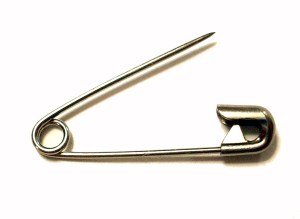 Safety pins are not meant to be passive—a furtive steel prick of conscience—hidden on a lapel like a secret handshake. They are tools of healing, kinetic kindness given to strangers, a means to spring into action.
 When I was little my father took me everywhere with him. I was a reasonably well behaved kid, and could be tucked in a corner with a book while he conducted a rehearsal or gave a voice lesson. Once, as we went to a meeting with someone about a concert his orchestra was playing, he gave me the usual spiel: please and thank you, sit still, don’t say fuck or shit, and if I was offered sweets, accept if I wanted it or not and say I’d save it for after dinner.

 I’ve enjoyed Jeanette Grey’s writing for a while, but I really loved her Art of Passion series.
 EIGHT WAYS TO ECSTASY starts with a bang (er-sorry-nah, not sorry) where the first book left us, in New York, where Rylan and Kate have to figure out their relationship in the real word, beyond their fantasy in Paris. Instead of running from the messes they’ve inherited from their parents, they must deal with them, while caught up in their own turbulent need for the other.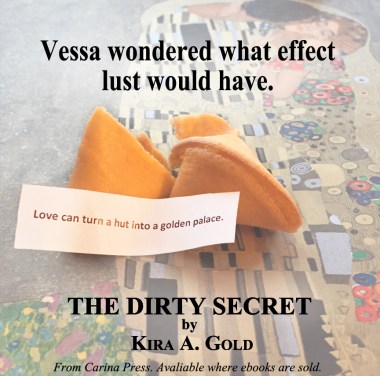


 One of the things I love about
  From
From  kira a. gold