Midsummer on Öland

stones
Tall stones marking a Viking burial at Gettlinge, an old stump windmill in the background.

Öland, (pronounced err-lahnd) is an island off the southeastern coast of Sweden, a magical place that time, and for eleven months of the year, most of the world forgets. Iron Age and Viking people settled (or at least died a lot) there, and the island served as the Royal game preserve for centuries of kings. Nowadays it’s a folksy artist summer hideout, with huge parties at midsummer that go on for days.

I first was on Öland—which translates to island-land, Swedes being rather literal like that–in 1991, and I fell in love with everything: the sea, the stones, the history, and the people. Everyone is beautiful in Sweden, from the craggy faced great grandmothers with laughing eyes, to brash boys that stare openly while not saying a word, and gorgeous women with the innate ability make really funky sweaters look fashionable. If you don’t believe me, have another shot of aquavit and tell me there isn’t something charismatic about that guy over there, the tall one who has been watching you all night and doesn’t look away when you meet his eyes.

The sunlight is amazing in Sweden in June. All the clichés of the “land of the midnight sun” are true; it’s as if the sun is too excited to set, and doesn’t want to miss the festivities. I lost track of the hour when I was there, and the day, it was simply summer. A Midsummer Flight’s Dream is an homage to the island, and the airports that take us there and get us home.
Getting her right

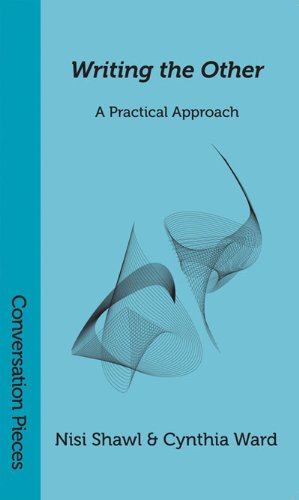
wtoI just read a book that I want everyone in the world to read: WRITING THE OTHER by Nisi Shawl and Cynthia Ward.
From Amazon:

During the 1992 Clarion West Writers Workshop attended by Nisi Shawl and Cynthia Ward, one of the students expressed the opinion that it is a mistake to write about people of ethnic backgrounds different from your own because you might get it wrong—horribly, offensively wrong—and so it is better not even to try. This opinion, commonplace among published as well as aspiring writers, struck Nisi as taking the easy way out and spurred her to write an essay addressing the problem of how to write about characters marked by racial and ethnic differences. In the course of writing the essay, however, she realized that similar problems arise when writers try to create characters whose gender, sexual preference, and age differ significantly from their own. Nisi and Cynthia collaborated to develop a workshop that addresses these problems with the aim of both increasing writers’ skill and sensitivity in portraying difference in their fiction as well as allaying their anxieties about “getting it wrong.” Writing the Other: A Practical Approach is the manual that grew out of their workshop. It discusses basic aspects of characterization and offers elementary techniques, practical exercises, and examples for helping writers create richer and more accurate characters with “differences.”

These two ladies, with a whole lot of gentleness and humor, have written a book that doesn’t just give fantastic guidelines for writing characters outside the dominant paradigm, it shows us new ways to see, how to take another blinder off.
Race, Orientation, Religion, Age, Ability and Sex are all discussed. (I wish it had a more eye-grabby cover; it looks like a dry academic discourse, when it’s actually easy to read, fun and exciting.)

The love interest in my latest WiP is the daughter of a general in a dystopian setting, where a common enemy has made for more racial unity, but feminism has been set back. This girl is gorgeous, self confident, and she kicks ass; my MC doesn’t have a chance. She’s also Black.

Y’know that internet list that came out about white people getting described like food? Ugh.
I want to create a real person who can stand on her own, no matter who reads my book, not a piece of cardboard, cut out with a white person’s scissors. So I went looking online for some help. I found a lot of articles about whether I should in the first place: the Root has a great one, a few that made me feel spanked before I even set words down, and some blog posts where I learned more from the comments than the articles.
But Shawl and Ward’s book was the only one I could find that guides a writer beyond “the unmarked state” and gives examples of how to write a marginalized character, and even has exercises that open the brain into seeing and writing a bigger picture. There are two essays at the end that are fantastic, too, both by Nisi Shawl- Beautiful Strangers: Transracial Writing for the Sincere, and Appropriate Cultural Appropriation.

And with what I’ve learned from Shawl and Ward’s book, and what has been clarified into usable and concrete advice, hopefully I’m a step closer to writing a more inclusive world.

Well Woven

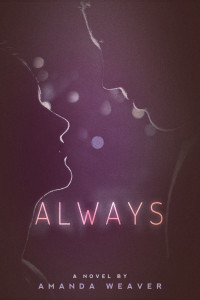
Always2d-200x300Amanda Weaver’s book, ALWAYS, is a delight. A quick but intense read that spans six years, this angsty romance is a coming of age story, for both our protagonists. We watch Justine grow into her career in the music industry and we see her mature emotionally, as well. We also see Dillon come to terms with his codependency with his best friend, and how he learns to be honest with himself.

The story shifts PoVs effortlessly between the two, and though there is no doubt in our minds that these two will eventually find their always, watching them getting there has you cheering them on (and occasionally wanting to wring their necks.)  Some parts felt obvious–the train wrecks hitting these two are obvious from a mile away–but Weaver writes each situation almost from the perspective of a close friend, with hints and warnings and the grace not to say I told you so…

The glimpses into the music scene are interesting and well written. I would have loved to see even more of those moments, when you feel our two working together; their “musical chemistry” is as interesting as the sexual tension.

I enjoyed Dillon, he’s a good guy, and patient; we learn more of who he is by his interactions with others than by seeing him act on his own, but Justine is just plain terrific. What I love about her, and what makes this book so wonderful, is how she makes her principles and stands by them. Even in the beginning, when she’s just a young girl trying to make it in a world where excess is the norm, she doesn’t compromise, and by the end, we are so sure of her strength, we trust all the decisions she makes.

Awakening

sleepers-awake-eden-barber-paperback-cover-artEden Barber’s gorgeous story Sleepers, Awake? has some ties to Neil Gaiman’s A Game of You (which owes much to Bones of the Moon, by Jonathan Carroll) but the story itself is lovely and unique.
It’s a complicated setting, yet tragic and beautifully. Agnes grows on you, becomes you, and dares to dream and love the way you wish you could. And her best friend is the absolute best. All the people grab you as real, and the main character’s choices and her obsessions and her wolves are flawed and perfect at the same time.
Sleepers is a book that takes brains; and is not for the faint of heart or those wishing for a mindless forgettable read.

Odin’s Murder Playlist

Julian worships Dylan, Ethan plays it loud, Memory wants it sexy, and Faye likes it strange.

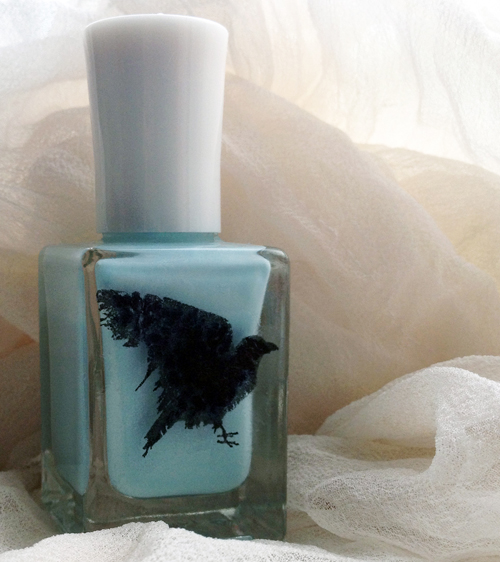
nail polishMaggie’s Farm: RATM

Rumor Has It: Adele

One Two Three Four: Chennai Express

I Put A Spell On You: Shane McGowan et al

Hats Off to the Bull: Chevelle

Gotta Serve Somebody: Mavis Staples and Johnny Lang

Jaan: Talvin Singh

All Along the Watchtower: Jimi Hendrix

Shut Up And Drive: Rihanna

Facebook.con: Alabama 3

Subterranean Homesick Blues: Michael Franti

I Believe in You: Cat Power

Dorian Gray

Playbill and a silver thimble, a spool of silk thread, and yellow tailor pins.

A 250 word flash dare asking, “When you are down to the wire on a project, how do you make it through?”

DORIAN GRAY

“Thank you, fourteen,” she mumbles, sniffing at yesterday’s armpits, Tuesday’s laundry, and the fresh coffee he’d left on the windowsill, still hot. Skipping the shower, makeup, and curling iron gives her enough time to hem Basil’s Act One frock-coat.

“Thank you, two,” she mutters when the text message bleats, clenching her fists around the hank of elastic, broken nails digging her palms. She’s jittering with the pulse of caffeine cruising through her veins; the fabric store clerk checks her ID twice.

Dorian loses his ascot, but her shirt is the same color as the one in his painting; she tears the bottom six inches off and loops it around his neck. “Thank you, House Open.”

“Thank you, places.” She winces at Sibyl’s panicked cry, and digs in her purse for her last tampon and chocolate bar. Lord Harry’s waistcoat pops a button. Her earring passes for a jeweled brooch.

They cluster at the mirror by the stage left door.
Her hair is a twisted disaster, snarl on one side like a bramble, and there’s her chalk pencil. The bruise over her eye (the dress-form lost the skirmish) has blossomed to a vicious plum, and her tattered shirt hangs sideways, caught on her failed bra. Her pants, stained with paint, are belted by a measuring tape charting how many meals she’s skipped this week.

She smiles, and her tooth–chipped from biting threads—catches at her starch and steam chapped lips. She might be gruesome, but the actors, they are beautiful.

Undying love.

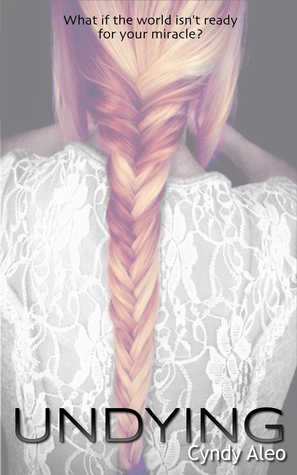
Sometimes a book grabs you by the throat and won’t let go. This one grabs your heart and leaves you breathless. I’ve been flailing about this book for two days; I managed to garble out two separate nonsensical reviews of love-vomit that said absolutely nothing. Let me explain:

Imagine if Nicholas Sparks were an intelligent woman,  writing a love story where the shocking twist is known from the start, and the angst wraps you in sniffly sweetness rather than a sledgehammer to the gut. Then add a sense of humor and a bit of sexy.  Cyndy Aleo would still be better.

18456415

Her book flies in short chapters, with alternating points of view between a young couple learning that ’til death do us part might actually last a bit longer; on the third day (and yes, there is cheeky reference to The Story) Adrienne comes back from the dead, and she and dreamy husband Cam must figure out how to deal with a modern second coming.

(Did I mention he is dreamy? The author actually gives us very little idea what Cameron Tattersall looks like, but we know he’s gorgeous, because anyone so in love with his wife has to be good looking.)

While they sort through the repercussions of a miracle, and learn to trust each other again, we also watch Adge’s battle with breast cancer through a backward mirror, and the devastation it causes to the loved ones around her.

This is where the story becomes personal for me.

The pink ribbon runs its poison through my genes. I know when an author gets it wrong. Doesn’t do their research. Glosses over the wrong details. Or deliberately presses the toxic buttons, and relies on the same painful cliches.

But Cyndy Aleo captures this tough subject with enough sensitivity and distance to buffer the reader from the horrors of the disease. She blurs details and avoids the procedural jargon (that can “date” a story  within months, due to medical advances), instead showing the effects the tragedy has on the couple, and how their love carries them through. This book isn’t about the viciousness of cancer, it’s about love and laughter, and leaps of faith.

There were times I looked for an M. Knight Shamalamadingdong twist–that ‘and then he wakes up moment’–a few loose ends leave the reader wondering what might be a clue, a hint of–oh, so that’s what really is going on–but nothing so crude mars the trust that the author builds through to the very end.

Irreverent, charming, and so sweet.
Go read it!

Charm Bracelet of Woe and Keening

The cover of Odin’s Murder got some buzz. We even got a hysterical mention on Cover Snark.
When I show it to friends, I invariably get 3 questions:

When is the book out? (eta: The book ran from September 10, 2013 to March 5, 2016.)

Is it about the Aaron Hernandez case? -No. We picked the title over two years ago. The story has nothing to do with the tragic death of Odin Lloyd.

Where did the bracelet come from? -I made it. My step-daughter is the hand-model on the cover.

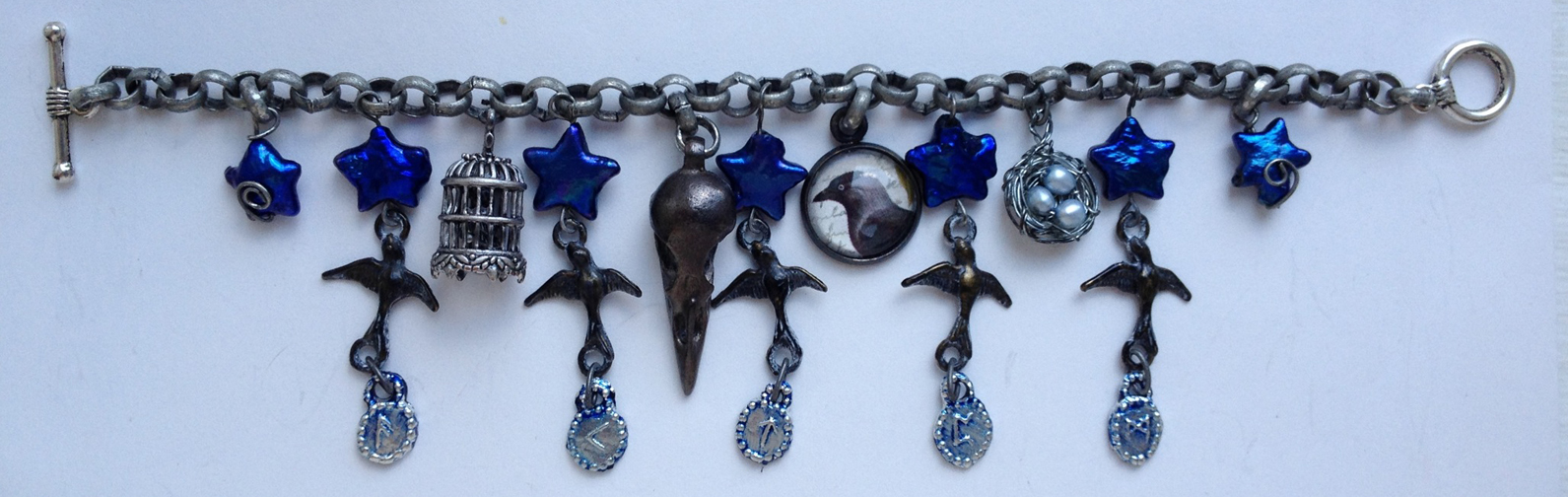
On occasion I make “prop jewelry” to complete a costume design, so I tried my hand at a representation of the bracelet in the book. I made two similar ones; the first went to Angel. This is the second:
photo
I love the weirdness and the hand-craftyness of the little charms. The pewter skull came from MoonRaven designs, and the runes from Rekon, but over all, it’s a really complicated piece, and too delicate to represent our story.
So on the next I went a bit darker and more jumbled:giveaway
This one has a solid feel that I liked–the young women in this book are not wilting flowers–but the runes themselves are difficult to see. There’s also a steampunk vibe that is not our genre. So I started over, and went big:
and sabo
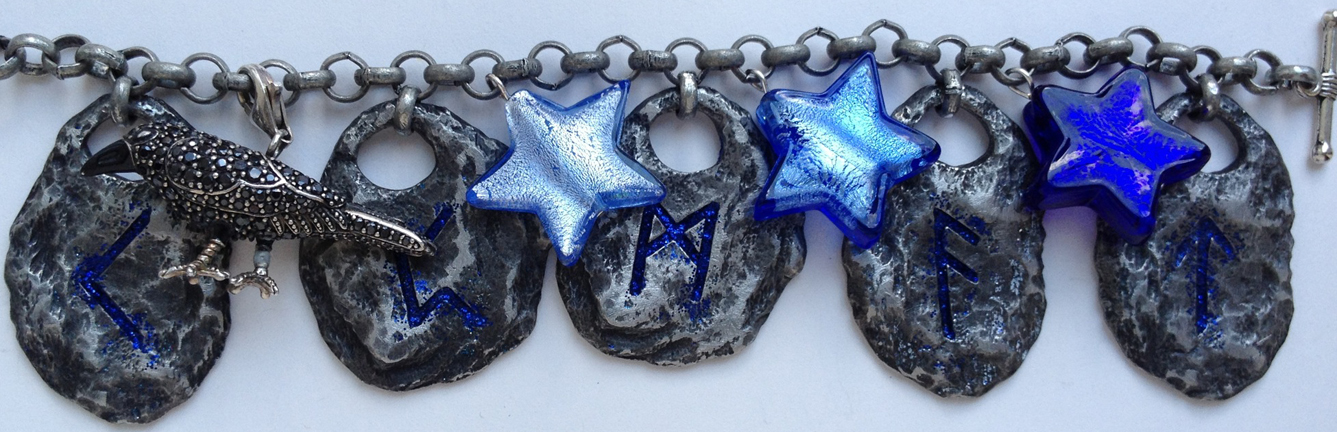
These have weightiness that the Viking influence has on our story, but they are huge! The half-dollar sized pendants swallowed my teen thing’s hand, and my awesome raven charm is lost in the metal behind him. Also, it weighs almost a pound.
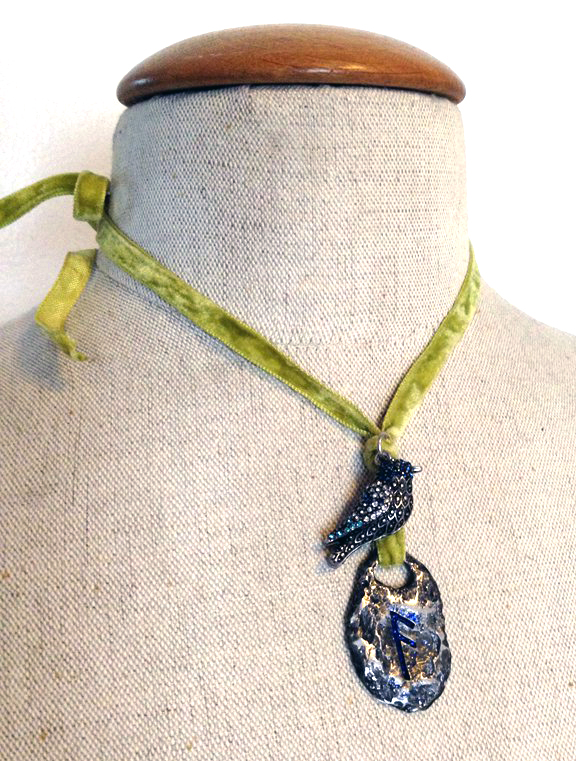
I gave up for a while, but then last April I was in Stockholm, and I saw these sterling charms from across the entire shop. They were perfect–modern, pretty and bold–like our girls–and a good fit with some enamel crows I’d found online. And so the cover bracelet was born with the help of a needle nosed pliers:cover
The turquoise color motif works well against the skin tone, and is a great contrast with the red nail polish. AngstyG did the rest of the work.
(The bracelets on my wrists, they are a-jingling!)

Musings on Runes – ODIN’S MURDER outtake

A bit that seemed too esoteric for the flow of the scene, but gives some fun details-

Musings:
(outtake)

“The runes themselves have inherent meanings, too.” Faye turns back to the drawing in the book. The cuff of her sweater has begun to unravel, the piece of yarn an even squiggle of not brown, but many multicolored fibers spun together. “They aren’t just letters with sounds.”

“The way a Chinese character for strife is a house with two women in it?” my brother asks. He reaches for the book again, and I smack his wrist away.

“That’s not quite true, actually. Though there are characters that do have specific connotations.” She smiles at him, a wide grin, shocking on such a little face. My brother blinks, and his teeth click together. He’s not used to being told he’s wrong. “It’s more like comparing “jingle” and “jangle.” Both are basically the same word, but the “i” makes it a happy word, and the “a” a discordant one.”

“So when translating this stuff, you know that words can mean just by the letters alone?” Ethan’s face has lost his usual scowl.

“Yes. Exactly. See, look here.” She points to a word. “There are a lot of ways you could write the word “death”, but whomever carved this used the runes hagalaz and nauthiz.”

“So what does that mean?” I ask Faye.

“Well, I don’t think the woman named Kaunan died of natural causes.  This infers that she was killed.”

Dirty Socks

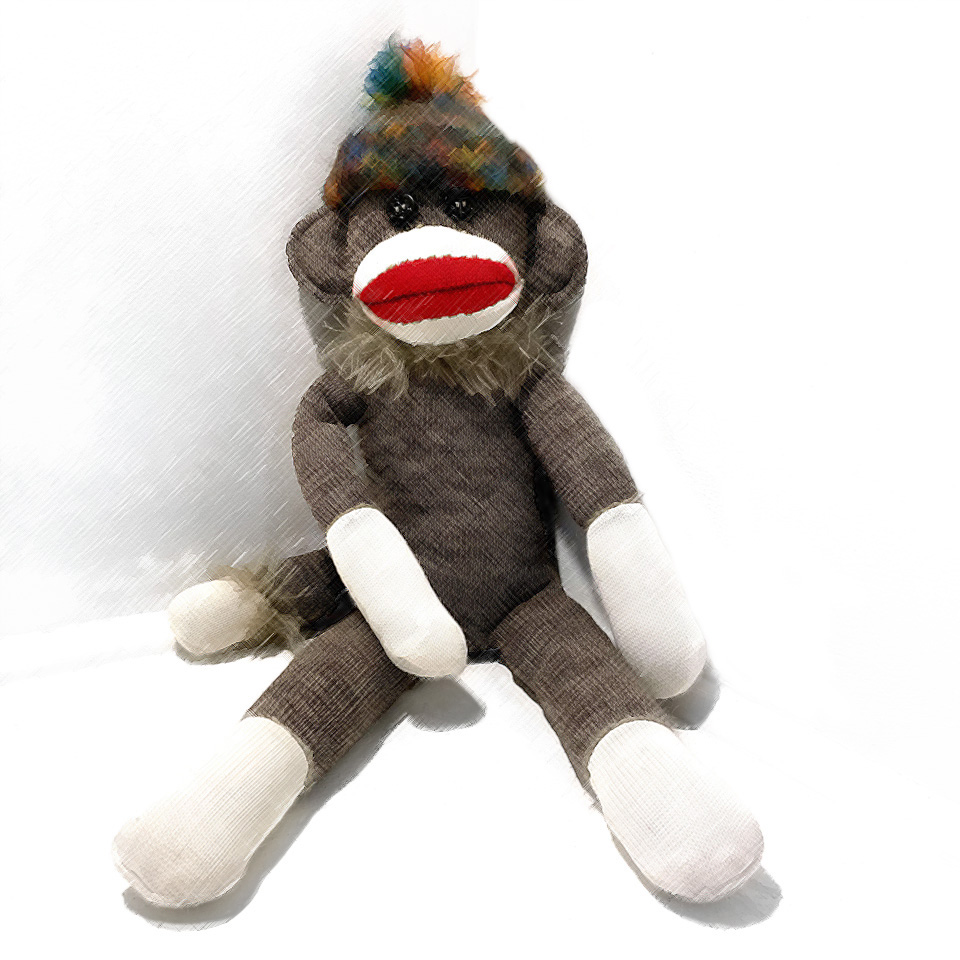
Sock monkey with multicolor mohair hat.

Flash challenge: a story with three sentences. (I’m probably going to hell for this one.)

Dirty Socks:

Monkey’s brains are filled with cotton wool, the stuff that comes from yarn stores, though he once told Teddy that it came from the bra of a flat-chested stripper from Vegas, and that’s why he thinks the thoughts he does, and he’s made from socks worn by a lumberjack, too, so he could kick anybody’s ass, even the boy who sneaks out the window late, late, late at night.

He knows he’s a he-Monkey because when he wishes he could masturbate, he wants to yank, not to finger, not like the girl who isn’t little anymore, lonely quick movements under her covers, who doesn’t realize his button eyes see in the dark, sewn wide open, watching her, his tail stiff and quivering.

His red smile stretches wide, wide, wide, for he will be there long after the boy is gone, smothered up against her soft breasts as she cries; he’s not a jealous Monkey–after all, Teddy doesn’t have a penis either–and no one looks as good in a sock cap as he does.