Peppery amber ashtrays, coconut and pineapple daiquiri mix, sandalwood sawdust on the floor, and plastic flower musk underneath.
It’s kind of awesome in a retro chichi skirt way, though I was sort of hoping for some melting clocks, or waves that went on for eternity. Doesn’t last long, but finishes on a lovely patchouli tinged vanilla.
This song was also released in Spain in 1991– the title track of Vicente Amigo’s first album.
Opaque black bottle with gold Art Deco detail of a woman and her child
Peachy honey aldehydes at the beginning, then flowers pile on, heavy on the iris. Woods file in quickly, with sandalwood and amber on the bottom. Lasts most of the day, and the next on cotton.
It’s sort of frumpy but mischievous, like the great aunt who slipped you a taste of her cordial when your parents said you still were too young to have any.
Lanvin released this in 1927. A year later, Boléro by Maurice Ravel premiered in Paris. Brilliant versions of the piece exist all over the internet–André Rieu’s is great, Pink Martini’s is worth a listen, even Frank Zappa conducts one, cigarette in hand. My favorite of the moment is this very special arrangement by Angelique Kidjo with Branford Marsalis.
I was sixteen when I saw the Stravinsky Fountain in Paris, and fell in love with Niki de Saint Phalle’s wonderful sculptures.
She released her perfume in 1982–as a way to fund her life-long Tarot Garden sculpture project–with a variety of illustrated bottles, including a zodiac series called Eau Defendue.
The eau de toilette opens with peaches and wormwood, and mint–that has just enough of a toothpaste-and-orange-juice dissonance to make one wake up and pay attention, not unlike the vibrant color-blocking of her sculptures–weird and bright, yet pretty.
Carnation and patchouli and some green-dyed-leather twists it around for several hours, and woodsy moss covers the skin for the rest of the day.
Jean Tanguely, Niki’s partner, insisted that moss be allowed to grow on the Centre Pompidou sculptures, as Nature’s contribution to the art–so it can’t be a coincidence that the perfume carries the same green notes.
For more about the artist and her Tarot Garden, check out this New Yorker article.
Igor Stravinsky (watch a video of him conducting here) was a huge influence on John Williams, as well as The Beastie Boys, who sampled The Firebird Suite in two of their songs from Hello Nasty.
I like to think Niki de Saint Phalle, whose artistic style included found materials and juxtaposed media in her feminist compositions, might have approved of this cover by Robyn Adele Anderson. (And the guy on the Theremin is awesome!)
Opens with a gasp of L. L. Stardust Midnight’s iris musk then breathes fermented raspberry jam and spruce.
Nice, but sadly finishes quickly with AXE body spray cedar.
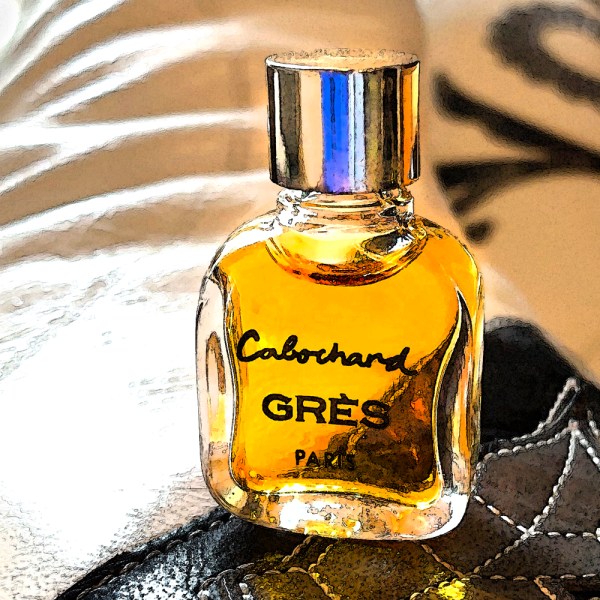
This mini is the eighties edition of the seventies formula, which was a remake of Caron’s 1913 original. (The 2018 version is a complete revamp into a pear and vanilla gourmand.)
A big gust of retro aldehydes out of the bottle, carrying a mess of flowers–jasmine, lily-of-the-valley, rose and tuberose–that settle down fairly quickly a few inches above the skin, anchored by sandalwood and amber.
It’s pleasant, and nice to find a vintage scent of that era that isn’t a tangle of oakmoss and civet, but not one to keep for nostalgia or reference.
In 1970, the top female pop song in France was Venus, by the Dutch band Shocking Blue–it was also re-released in the eighties by Bananarama.
(There was actually a “Venus Waltz” by the American Standard Orchestra recorded in 1913, on cylinder.)
Citron d’Erable is exactly what Atelier Cologne says it is: lemon maple, with a sequoia base.
Opens with the brand’s signature burst of citrus: fresh sharp zest, with sweet custard underneath. Slowly settles to lemonade sweetened with maple syrup, which seems like a weird description, but it works in a lovely Vermont hippy way. Lasts a good half hour before fading into dry rich woods.
It’s very non-flirtatious and personal–wear in autumn on “me days.”
Macy Gray makes self indulgence necessary, rather than vanity.
This makes me feel like I’ve walked out of the most expensive shoe store in Paris.
A quick opening of aldehydes and spicy fruit, as if to anchor the time period–and a few of the usual flowers to sayI am French!—then the leather kicks in with patent pointy toe boots and kid gloves, leaving prints behind for days.
It’s down to earth–this footwear has solid heels–with oakmoss and pungent geranium and a pinch of tobacco.
I’d wear it if it had a touch more sweetness.
Almost empty retro apothecary cologne flask with embossed gold leaf label on a windowsill.
Santa Maria Novella’s site calls Calicantus “a bouquet of fruity floral notes,” which makes it sound like every Victoria’s Secret bottle in the last two decades, and this is quite special.
It’s marketed to women, but has terrific bay notes usually found in seventies aftershaves, and I’d enjoy huffing it on a guy, too.
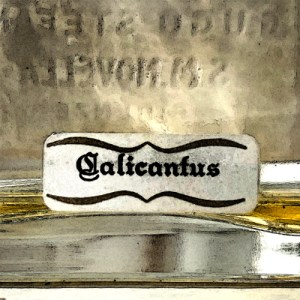
Tiny paper label with “Calicantus” in gothic font on bottle back.
Opens soapy clean, with citrus blossoms that soon settle into calycanthus flowers–with the sweet clove/anise of carnation, but with a little more nectar on top, and the earthier base of honey on the bottom–and some woody support. The dry down is quick yet unexpectedly sweet, the fruity notes in the description–peachy with an almond/sour cherry bite and a drop of amber. Lasts on silk forever.
Calicantus came out in Florence in 1999, when Anna Oxo hit it big with Senza Pietà–Without Mercy.
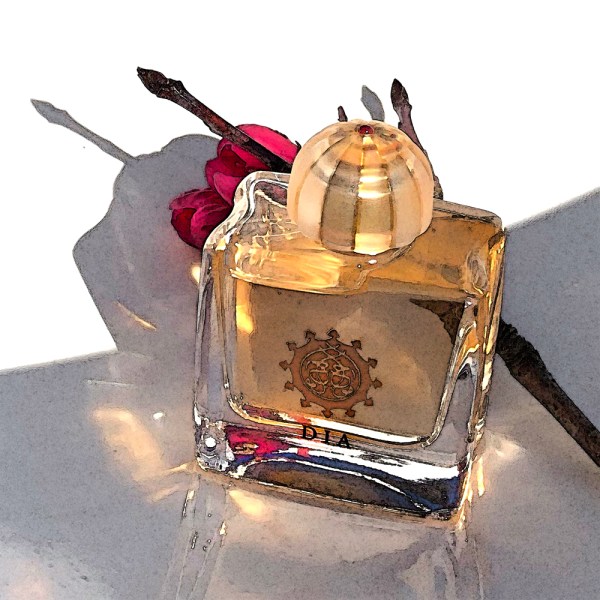
Very topographical–at arms length an easy breeze, in personal space it becomes new blooming roses edged with silvery musk, and on the skin it’s budding orchard trees and soap lather–and lasts that way for hours.
Some scattered herbs keep it organic, and a touch of incense smoke gives it a bit of body.
Lovely, but for me, spring is usually March storms and mud-season, messy and chaotic. This is too refined.
This breezy-but-refined song topped charts in 2002, when Amouage first released Dia.

 Bingo hall piña coladas.
 Grapefruit pith and rotting tree bark. There could be some sour berries in there, too.
 I was sixteen when I saw the
 This mini is the eighties edition of the seventies formula, which was a remake of Caron’s 1913 original. (The 2018 version is a complete revamp into a pear and vanilla gourmand.)
 Citron d’Erable is exactly what Atelier Cologne says it is: lemon maple, with a sequoia base.
 This makes me feel like I’ve walked out of the most expensive shoe store in Paris.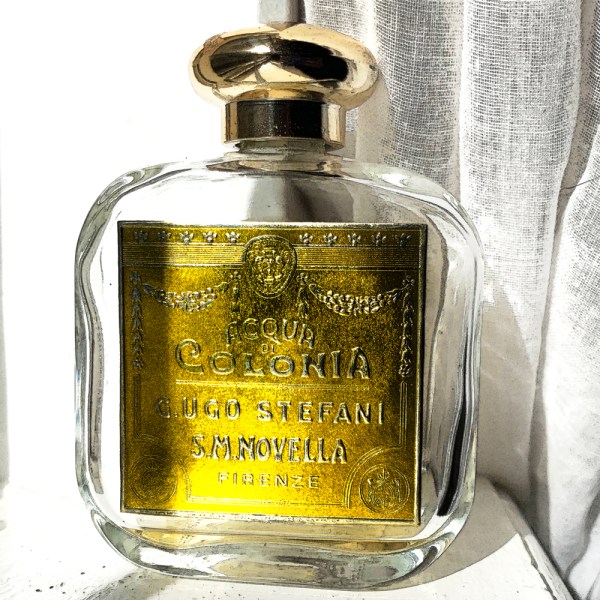
 The perfect spring, distilled into liquid form.
 kira a. gold